
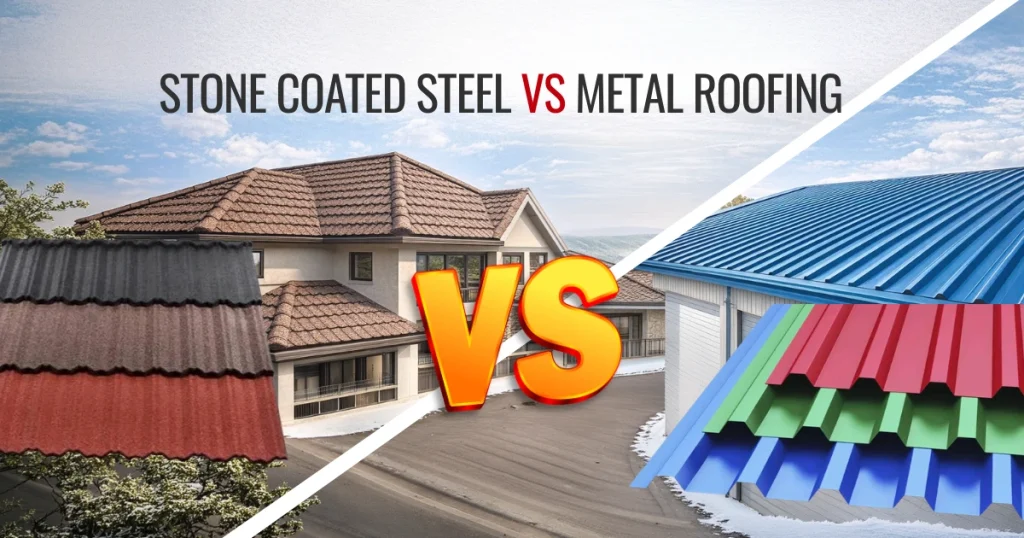
When homeowners and property developers compare roofing materials, durability is often the deciding factor. In the debate of Stone-Coated Steel vs. Metal Roof, many people assume both options offer similar longevity because they are made from steel or metal.
However, the reality is more nuanced. The way each roofing system is designed, coated, and installed significantly affects its lifespan.
In India’s diverse climate, from coastal humidity to scorching summers and heavy monsoons, the right roofing choice matters even more. While traditional metal roofs have long been trusted for strength, stone-coated steel roofing stands out for its superior protection, extended lifespan, and lower maintenance demands.
Let’s explore both options in detail and understand which truly lasts longer.
Understanding Stone-Coated Steel Roof Construction and Benefits
Stone-coated steel roofing is not just a basic metal sheet with a decorative finish. It is a multi-layered roofing system engineered for long-term performance.
This layered construction makes stone-coated steel one of the most advanced roofing solutions available today. Stone-coated steel roofing typically consists of:
- A high-tensile steel core
- Aluminium-zinc alloy coating (for corrosion resistance)
- Acrylic bonding layer
- Natural stone granules on the surface
- Clear overglaze for UV protection
Why Stone-Coated Steel Is the Best for Longevity?
In the discussion of Stone-Coated Steel vs. Metal Roof, durability begins with construction. Stone-coated steel roofs resist corrosion better because of the aluminium-zinc coating. The stone granules provide an additional barrier against UV rays, rain impact, and temperature fluctuations.
Unlike traditional metal sheets, the textured stone surface reduces thermal expansion and contraction. It prevents fastener loosening and panel distortion over time. For homeowners seeking maximum roof longevity, stone-coated steel is the better long-term investment.
Other major benefits include:
- Lifespan of 40–70 years with proper installation
- Excellent resistance to fading and surface degradation
- Superior sound insulation during heavy rain
- Attractive appearance without compromising strength
Traditional Metal Roofing Materials and Their Durability Characteristics
Traditional metal roofing typically refers to materials such as galvanised steel, aluminium sheets, zinc panels, and corrugated metal.
Types of Metal Roofs
Each of these offers decent durability. However, their performance varies depending on coating quality, thickness, and environmental exposure. Common metal roofing types include:
- Corrugated galvanised sheets
- Aluminium roofing panels
- Standing seam metal roofs
- Zinc roofing systems
Durability Comparison
Standard metal roofs generally last between 20 to 40 years, depending on maintenance and climate conditions. Galvanised steel can corrode if the zinc layer wears away. Aluminium performs better in coastal areas but may dent more easily. Zinc roofing is durable but often expensive.
In the Stone-Coated Steel vs. Metal Roof comparison, traditional metal roofing lacks the multi-layer protection system found in stone-coated steel. Therefore, although metal roofs are durable, stone-coated steel roofing is the best option when long-term structural integrity is the goal.
While metal roofs are strong, they are more prone to:
- Surface corrosion over time
- Paint fading and chalking
- Oil canning (visible waviness)
- Expansion-related fastener issues
Weather Resistance in Harsh Conditions
India experiences extreme weather, heavy monsoon rains, coastal salt air, high humidity, intense sunlight, and strong winds. Roof longevity depends heavily on how well a material handles these stresses.
Performance in Heavy Rain and Storms
Stone-coated steel roofing excels during heavy rainfall. The stone granules diffuse the impact of rain, reducing noise and protecting the steel underneath. The interlocking panel system also enhances wind uplift resistance.
Traditional metal roofs, while strong, may amplify rain noise and are more susceptible to panel movement during storms if not secured correctly.
Protection Against Heat and UV Rays
Stone-coated steel roofs reflect heat while the stone surface shields the base metal from direct UV exposure. It reduces heat absorption and prevents premature coating breakdown. Metal roofs, especially darker painted ones, may heat up significantly. Over time, UV rays can cause paint to fade and surfaces to deteriorate.
Coastal and Humid Environments
In coastal regions of India, corrosion is a major concern. Stone-coated steel’s aluminium-zinc alloy coating provides superior corrosion resistance compared to standard galvanised steel.
In the debate of Stone-Coated Steel vs. Metal Roof, stone-coated steel is the best performer under harsh environmental conditions. Its layered protection system ensures longer service life even in challenging climates.
Maintenance Requirements That Affect Long-Term Durability
Maintenance plays a key role in determining how long a roof lasts. Even the strongest material can fail prematurely without proper care.
If neglected, corrosion can spread quickly once the protective layer is compromised. Metal roofs require:
- Regular inspection for rust spots
- Repainting or recoating over time
- Checking fasteners for loosening
- Cleaning debris to prevent moisture retention
Maintenance Advantages of Stone-Coated Steel
Stone-coated steel roofing requires minimal upkeep. The stone granules protect the surface from direct environmental damage, reducing the need for repainting or recoating. When comparing Stone-Coated Steel vs. Metal Roof, maintenance is a critical factor. Stone-coated steel is the best choice for property owners who prefer lower long-term upkeep and reduced lifecycle costs.
Benefits include:
- Low risk of rust formation
- Minimal repainting requirements
- Reduced expansion-related issues
- Longer intervals between inspections
Common Durability Issues and How Each Material Handles Wear
Understanding how each roofing system responds to wear and tear helps clarify which lasts longer.
Corrosion
Traditional metal roofs are vulnerable once protective coatings degrade. Rust can weaken structural integrity.
Stone-coated steel, with its aluminium-zinc alloy and stone layer, provides multi-level corrosion protection.
Dents and Impact Damage
Metal sheets can dent from hail or falling debris. While they remain functional, dents affect aesthetics. Stone-coated steel’s textured surface disguises minor impacts and enhances its hail resistance.
Thermal Movement
Metal roofs expand and contract with temperature changes, potentially loosening screws.
Stone-coated steel panels are designed to minimise expansion-related stress, making them more stable over time.
Colour Fading
Painted metal roofs may fade unevenly under strong sunlight.
Stone-coated steel maintains colour longer because natural stone granules resist UV degradation. In every key durability challenge, stone-coated steel roofing handles wear more effectively. This is why, in the Stone-Coated Steel vs. Metal Roof comparison, stone-coated steel is the best long-term performer.
Making the Right Choice for Maximum Roof Longevity
Choosing between stone-coated steel and traditional metal roofing depends on more than initial cost. Longevity, maintenance, climate compatibility, and aesthetic value all matter.
When Metal Roofing May Be Suitable?
- Shorter-term construction projects
- Budget-constrained installations
- Industrial or temporary structures
Why Stone-Coated Steel Is the Best Choice?
While the upfront investment may be slightly higher, the lifecycle cost of stone-coated steel is often lower due to reduced repairs and longer durability. For residential homes, villas, resorts, and commercial buildings in India, stone-coated steel roofing offers:
- Longer lifespan (often 50+ years)
- Better resistance to corrosion and weather
- Lower long-term maintenance costs
- Enhanced curb appeal
- Superior structural stability
Conclusion
When evaluating Stone-Coated Steel vs. Metal Roof, both materials offer durability and strength. However, longevity depends on construction quality, weather resistance, and maintenance demands.
Traditional metal roofs can last for decades with proper care, but they are more prone to corrosion, expansion, and surface degradation. Stone-coated steel roofing, on the other hand, combines advanced coating technology with natural stone protection to deliver exceptional durability.
In Indian climates, whether coastal, urban, or rural, stone-coated steel stands out as the best long-term roofing solution. Its multi-layer protection system, minimal maintenance needs, and superior resistance to harsh weather conditions make it the smarter investment for homeowners and developers alike.
If your priority is maximum roof lifespan, lower maintenance, and consistent performance, stone-coated steel clearly lasts longer and delivers greater value over time.